
The Unwritten World: A Mother’s Story of Down Syndrome and Joy
Written by Shreeya, Writer in Residence
When Shivani Dhillon gave birth to her daughter, Shreya, she remembers seeing the most beautiful eyes she had ever encountered. They were bluish-green – a startling, crystalline depth that promised an entire, unwritten world. She was completely overwhelmed by motherly love, a depth of emotion so vast it eclipsed the typical features of Down Syndrome: the slanting eyes, the flat nose bridge, and the moon-shaped face.
When the doctor first delivered the news – that Shreya had Down Syndrome – there was immediate, predictable shock and disbelief. Yet, deep within that initial wave, there was also a quiet, profound acceptance. Shivani and her husband had long discussed the possibility of having a child with a disability and had committed to welcoming their child “in whatever form he/she wants to come to us.” They hold no regrets about that commitment.
Navigating Shreya’s diagnosis was by no means simple. Though the family lived in the UK, Shreya was born in India while Shivani was staying with family for the delivery. At the time of the diagnosis, Shivani and her husband were separated by continents, with her scheduled to join him a month later. Due to her recovery from a C-section and her resulting weakness, the family kept Shreya’s diagnosis a secret for twenty-one days.
The lack of information was a heavy burden. Shivani did not know enough about Down Syndrome to confidently raise a child diagnosed with it, and researching online only deepened her fear. Every moment of those early days was consumed by thoughts of Shreya. Every instance of laughter was shadowed by guilt. Surrounded by family, the absence of her husband made the isolation worse. They dealt with their grief alone, a shared regret that they were not together when the news was broken to them. Compounding the challenge, Shreya also had additional health problems, including hypothyroidism and congenital heart defects. She suffered from chronic constipation, and infections were easy to contract and difficult to eradicate.
As soon as they could, the family returned to the UK, where Shreya began an early intervention program, a critical start for children with special needs. She came under the care of nearly half a dozen professionals, and the parents felt relieved that she was in the safe hands of people who genuinely cared. They were guided, helped, and supported through that difficult time.
But they soon realized a crucial component was missing: social interaction for a child her age. It was this need that prompted the decision to return to India to be with their extended family. They wanted Shreya to be surrounded by her grandparents, uncles, aunts, and cousins.
Yet, upon arrival in India, the initial anxieties and fears returned. Shivani felt lost, finding a complete lack of information and support. Even securing the right doctors proved difficult, a challenge amplified by living in a smaller city like Chandigarh.
Shreya eventually began her therapies, but the experience confirmed Shivani’s realization of how profoundly difficult the journey must be for new parents in India who learn of their child’s disability. They are often thrown into the deep end and left alone.
The journey begins the very moment those words are heard: “Your child has Down Syndrome.” A sense of being lost and betrayed is natural, often leading to the question: What did I do wrong to cause my child to suffer?
Shivani emphasizes that feelings of guilt and betrayal are natural, but she stresses a vital truth: it is not the parents’ fault that their child has a disability. She urges others not to spend their lives mourning for the child they thought they would have, but rather to embrace the special, lovely things that come with raising a child with special needs. She advises channeling energy into practical steps: seeing beyond the disability to focus on the child’s potential, seeking as much information as possible from doctors, and consulting with various pediatricians about therapies and specialists. The earlier therapies begin, the more beneficial and quicker the results.
Raising a child with special needs is a lifelong commitment that alters the lives of everyone in the immediate family, including other children. Shivani recalls the initial days of Shreya’s diagnosis when she couldn’t help but worry about her future, especially as the parents grew old. She repeatedly told her son, who was only three at the time, that he must always take care of his little sister. He finally turned to her and said, “Mummy, I know, I know, you don’t have to say it so many times.”
Parents must remember that the sibling of a special needs child will also have their own dreams and aspirations. It is essential to ensure quality time is spent with the other child, whose needs can sometimes take a backseat due to the sibling’s disability.
Shivani has found deep connection with other parents on this unique journey. She notes, “If you are a parent raising a child with special needs then you and I are like strangers on the same journey and yet we are not strangers at all.” They share the same fears and connect on a deep, personal level. Her friendships with other parents of children with special needs have proven invaluable, offering a forum to learn and share.
Shivani observes that in India, issues of disability are often kept hidden. Upon moving back, one of her priorities was actively seeking out other parents of children with Down Syndrome, making sure to ask every doctor she met for connections. She did meet a few parents, and they maintain regular contact, a small but growing community that she hopes will one day evolve into a robust support group.
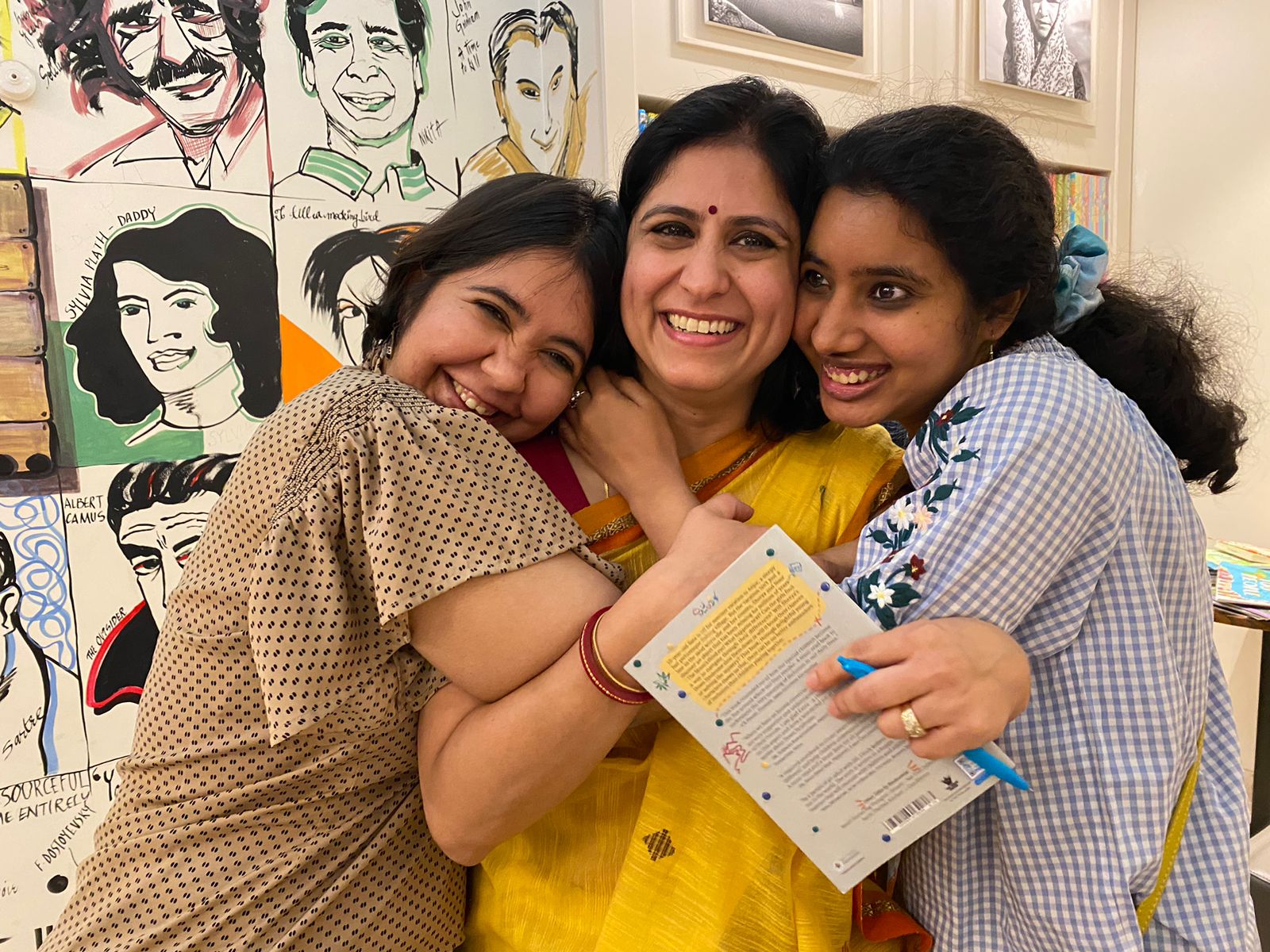
Shivani hopes her family’s story has evoked a smile, a tear, and the vital realization that despite life’s challenges, it is ultimately good, and that others are not alone with their array of emotions. Having Shreya in her life keeps Shivani humble and grateful. Her daughter has become her finest teacher, instructing her to find happiness in the small things that often elude us in busy lives. Many things once deemed important now seem trivial.
Shreya is now an always-smiling 15-year old, who laughs and chuckles at the drop of a hat. Shivani concludes that, despite her disabilities, Shreya is in many ways the lucky one, because her daughter will not have the capacity for malice, meanness, or selfishness. It is the steady, quiet accumulation of Shreya’s triumphs over disability that have not merely outweighed Shivani’s tears, but transformed them. Her persistent smile is the living proof that the greatest victories are not found in erasing difference, but in embracing the pure light it brings to the world.
With warmth,
The Smiling Dandelion Foundation