


The Power of Small Wins
Written by Shreeya, Writer in Residence
There is a particular hush that comes when we slow down and listen for lives unfolding in increments too subtle for applause. From a distance, growth looks like a curve that climbs, a list of milestones crossed off with tidy checkmarks. But close up – in the living room mornings, the therapy rooms, the afternoons that fold into unremarkable evenings – progress often moves differently. It hesitates. It circles. It repeats itself. It arrives in ways that are easy to miss unless one is paying close attention. These victories rarely announce themselves. They simply change what becomes possible, gradually.
Our culture loves milestones: first steps, first words, the leap from one grade to the next. These are the signposts by which we assume a child’s story should be read. And yet, developmental science reminds us that timelines are constructs – averages based on populations, not blueprints for individuals. For children living with disabilities, the world’s linear calendars can feel like a series of closed doors. Yet growth itself does not cease; it simply measures itself differently. The scientific literature on developmental progress suggests that children with disabilities often make gains that defy the neat frames of standard assessment – gains that may be incremental but are no less meaningful. And here, in these slow adjustments and small ratios of change, is where the notion of a small win takes on its richest meaning.
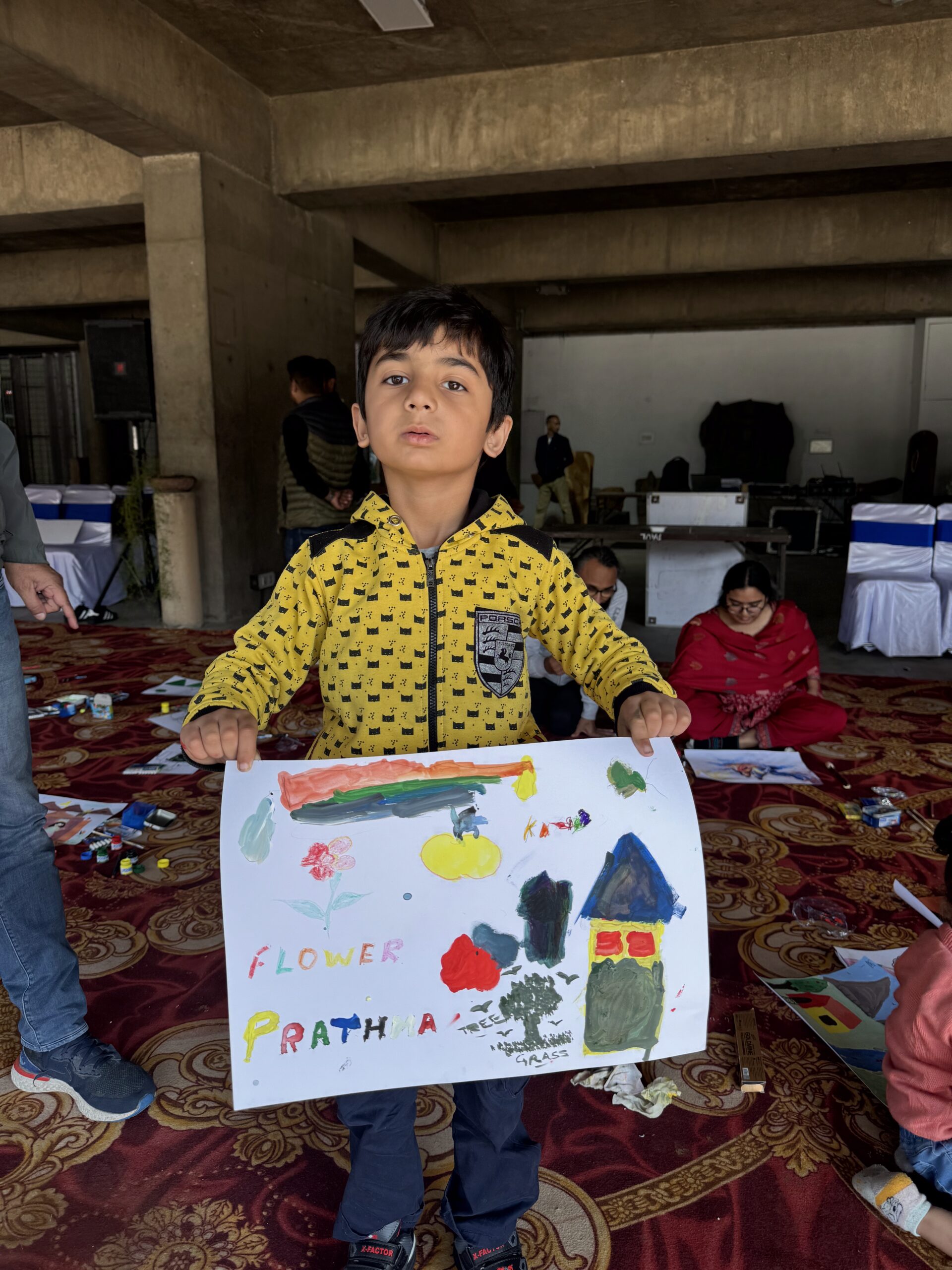
A “small win” is not a consolation prize, it is progress made in meaningful work – the kind of progress so subtle that it almost escapes notice unless one is paying deep attention. In the classroom, it may look like a child who once abandoned his seat now remains at the table for five minutes. In communication, it may look like a child who once recoiled from the gaze of another now looks briefly into an aunt’s eyes and smiles. These are not spectacular moments, nor do they come with fanfare, but each one carries within it a transformation of possibility.
For many parents, the early months or years of raising a child with a disability are shaped by an acute widening of attention. When we stop measuring against a universal clock and start watching closely, we begin to see patterns that were always there: the way a child’s hand finally finds the edge of a toy, the day a babble becomes intentional, the afternoon when laughter spills over without prompting. These are not the leaps we imagined when we first learned of a disability; they are quieter, yet they are arrivals in their own right.
This recalibration of expectation is not easy. Research on parental knowledge of developmental milestones shows that many caregivers begin their journey with incomplete information about what these markers even are, especially in domains like emotional and social development (PubMed). When parents let go of imagined futures and pay closer attention to the present, they begin to see that the smallest moments were never insignificant at all.
The power of small wins is not simply that they add up; it is that they challenge our narratives about success and worth. We live in a culture that prizes the spectacular and the swift. Yet the lived experience of raising a child with a disability teaches us to value steadiness over speed, consistency over climax. We learn that meaning accrues not through dramatic revelation but through patient repetition. A reminder becomes reassurance. Hesitation becomes an attempt.
In psychology, there is a concept worth pausing over: ‘mastery motivation’. It refers to the internal drive a child exhibits as they encounter and persist through challenges. In studies of families raising children with various developmental profiles, mastery motivation emerges as a strong predictor not merely of conventional achievement but of lifelong curiosity and self-regulated engagement (PubMed).
And just as children learn to welcome their own incremental steps, parents, too, transform. Through repeated small victories, caregivers discover depths of patience, empathy, and presence that were previously uncharted. Research from family studies shows that many parents of children with intellectual disabilities report increased tolerance, sensitivity, and relational depth precisely because they have learned to attend to progress that others might dismiss as negligible (LWW Journals). By learning to watch what is easy to miss, parents discover capacities within themselves they had not known
This shared journey changes the very texture of life at home. The small wins shape not only what the child can do, but also how the family learns to be. The sibling who once wished for a “normal” timeline now understands that love asks for patience rather than performance. The parent who once monitored the clock now watches the arc of time itself, recognising that slow growth is still movement forward. In these shifts, we find a deeper measure of belonging – one that does not derive from comparison, but from what is real and present.
We must also acknowledge that the world around these families is not always attuned to such wins. Many societies, including here in India, still lack robust systems of early support and inclusive practice. This gap means that the small wins must often be noticed and nurtured first at home, long before they are recognised by institutions.
And yet, that is precisely where their power is found. The small win does not demand recognition to be real. It requires only that someone is watching with a patience that parallels the child’s own. It asks us to widen our field of vision, to see progress as a constellation of tiny illuminations, not a single flame. It teaches us that worth cannot be measured in the speed of its movements or the peak of its accomplishments; it must be felt in endurance, the rhythm of persistence, and the accumulation of joy.
With warmth,
The Smiling Dandelion Foundation